
Afrina Kugelstadt
Investing in Research Saves Time and Money
Dachzeltnormaden
Service
Service Design
Duration
12 Weeks
Year
2022
Context
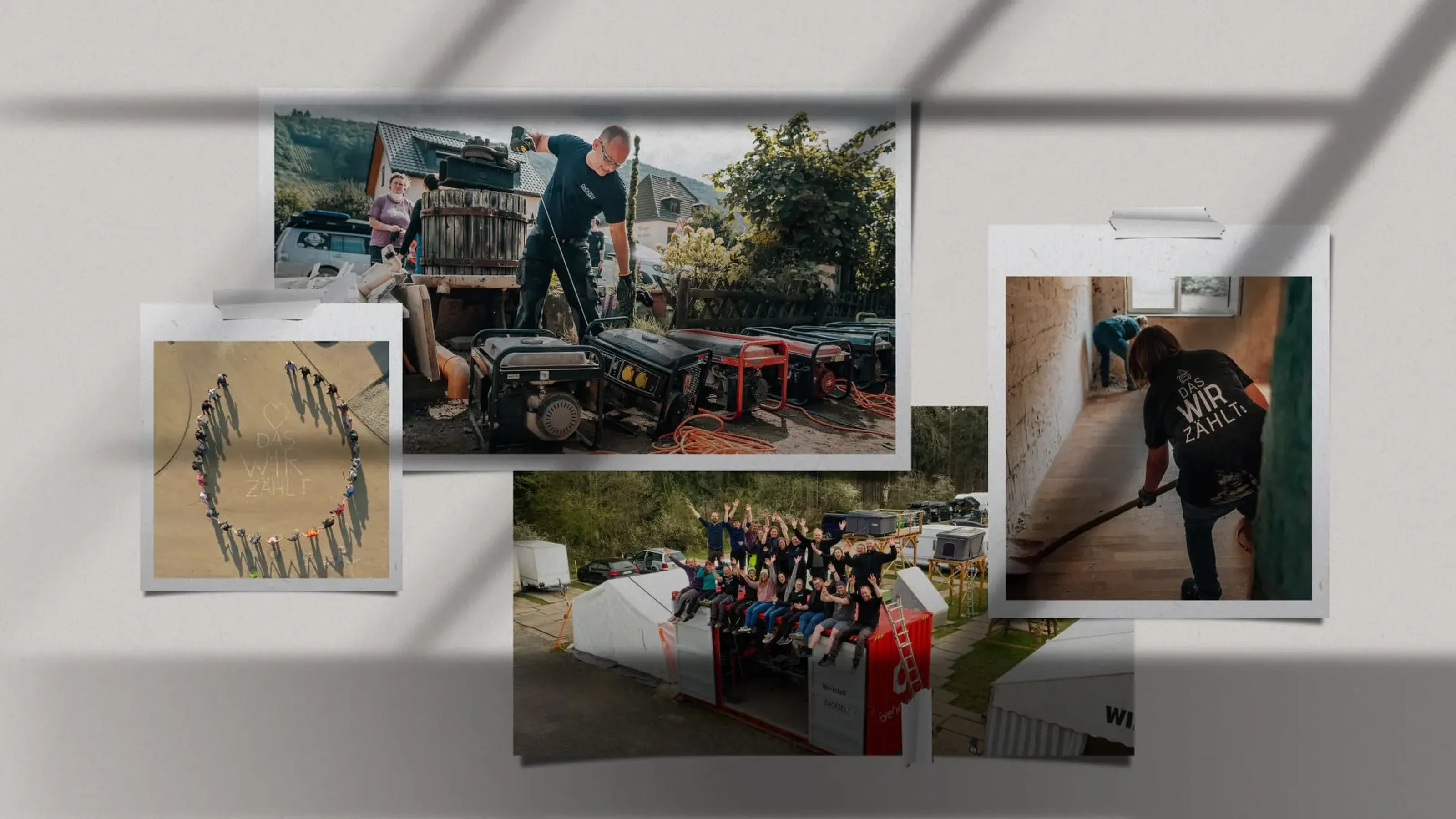
In July 2021, catastrophic flooding devastated the Ahr Valley, destroying entire villages and leaving many residents in need of urgent help. In response, the Dachzeltnomaden community founded the Dachzeltnomaden Hilfsorganisation (DZNH) to provide long-term aid. They sought to improve coordination and communication for disaster relief efforts by envisioning a digital platform to support volunteers and affected residents efficiently during reconstruction.
Collabration
I helped design and implement a user-centered solution by conducting workshops, creating personas, analyzing interview insights and collaboratively developing a tailored approach to address the client’s challenges. I also presented our findings and design decisions to stakeholders. This work was part of my role as a working student.
Scoping Workshop
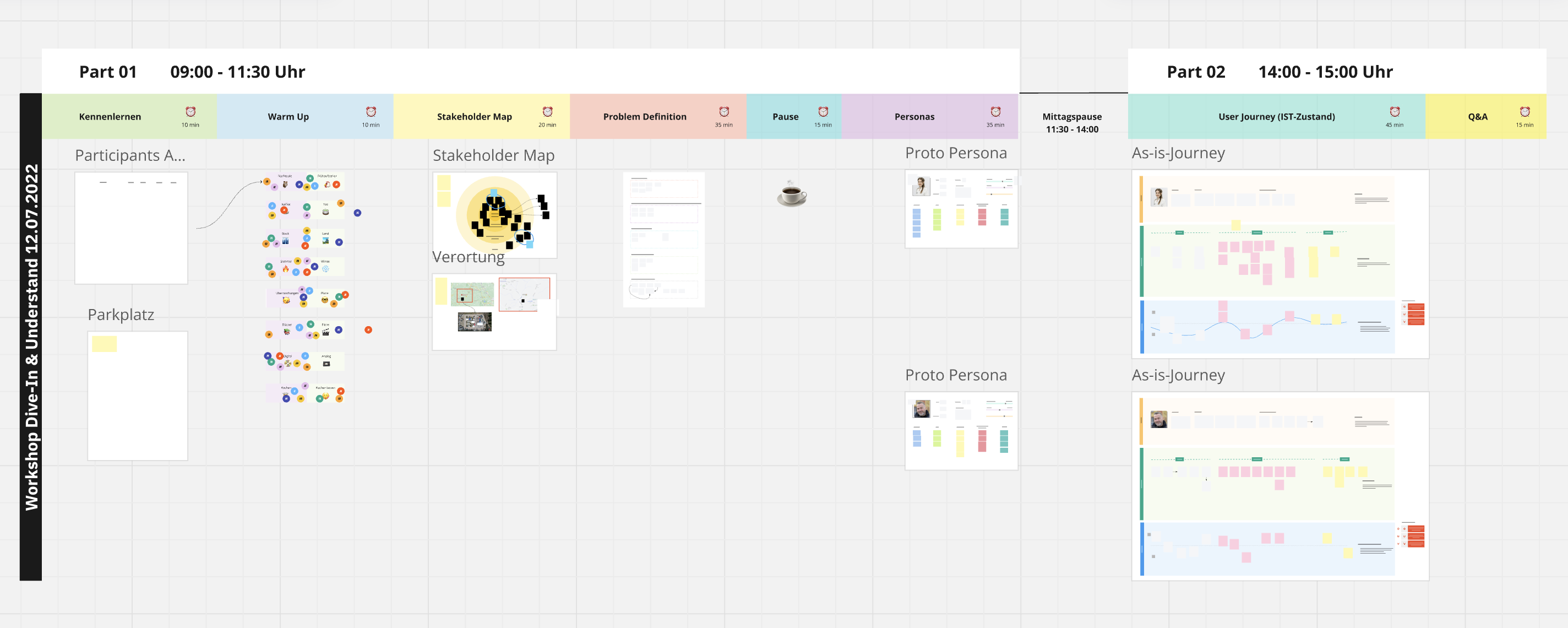
To understand their project environment, requirements, and workflows, we conducted a scoping workshop together. Methods such as stakeholder mapping, problem statements, and proto-personas were used to gather assumptions and information.
Problem Statement
- Information loss.
- Lack of collaboration between stakeholders.
- Insufficient digitization.
- No centralized management of information/tasks.
Possible Reasons for the Challenges:
- Many stakeholders are not interconnected.
- Different organizations lack a shared communication platform.
- No unified processes or agreements between authorities and NGOs.
- Unconnected authorities and inconsistent procedures.
Identifying Challenges and Opportunities with Affinity Mapping
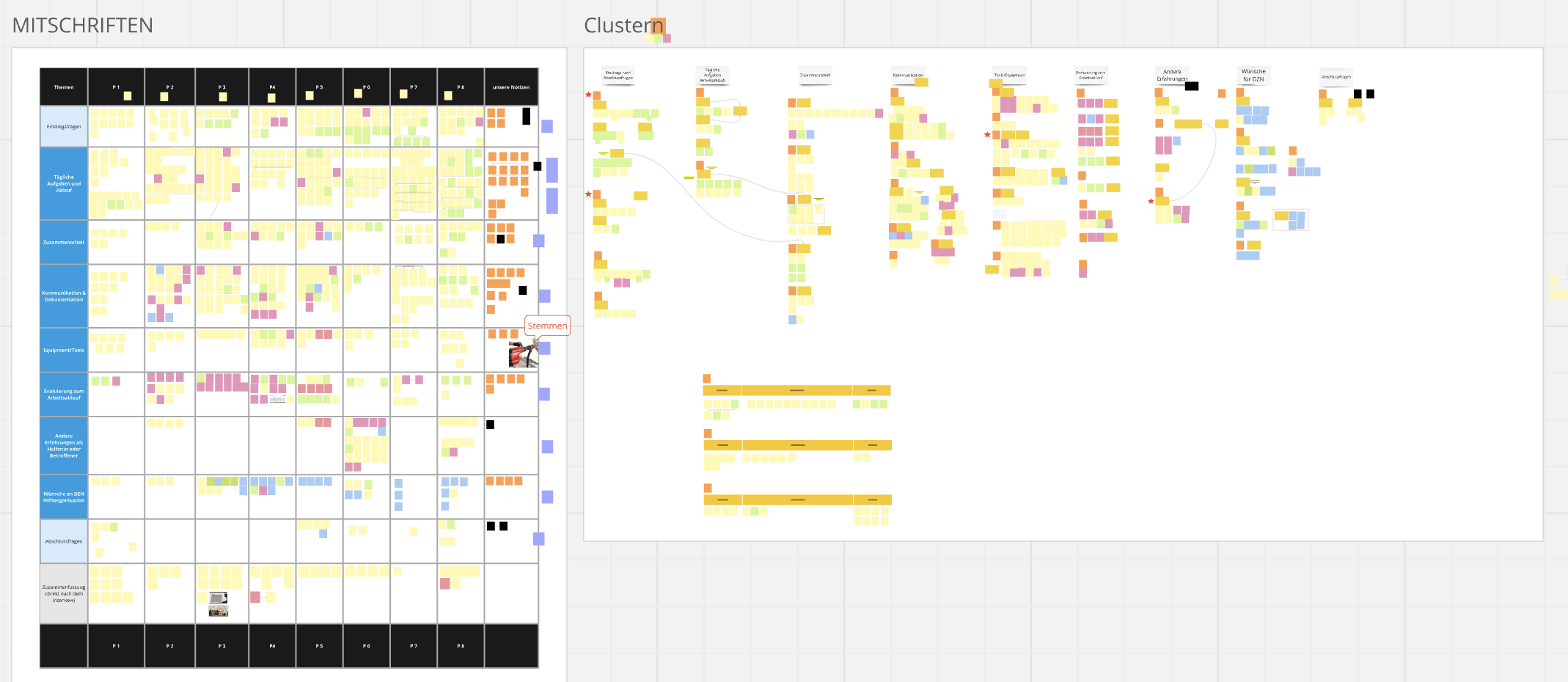
To gather insights, we conducted user interviews with the Dachzeltnomaden Hilfsorganisation core team and regular volunteers. Interview topics included daily tasks, internal/external collaboration, communication, documentation, and tools/equipment. Using affinity mapping, we organized interview responses into clusters, categorizing them as positive (green), neutral (yellow), or negative (red). This approach provided a holistic view, allowing us to identify patterns and connections in the data.
Conclusion - Research Saves Resource
Stakeholder assumptions and challenges often shift when considering the overall journey of all involved. Our research revealed that satisfaction with work processes among the DZNH core team and volunteers was generally positive, uncovering fewer optimization opportunities than initially expected.
Existing digital tools can support planning and coordination needs. We identified tools to enhance communication and site planning for DZNH. Additionally, delegating responsibilities within the core team can reduce silos, enabling faster decisions and improving efficiency.
Published Article
More to explore
Telecommunication
A customizable, white-label solution to unify and simplify orders across multiple network providers.
View Project

Skills management
Enhancing Skill Matrix:
Clear Visual Cues for Better State Identification
View Project
Skills Management
Creating 'Aha' Moments:
A UX Journey to Boost Engagement
View Project

Afrina Kugelstadt
afrina.design

Afrina Kugelstadt
Service
Service Design
Duration
12 Weeks
Year
2022
Context
In July 2021, catastrophic flooding devastated the Ahr Valley, destroying entire villages and leaving many residents in need of urgent help. In response, the Dachzeltnomaden community founded the Dachzeltnomaden Hilfsorganisation (DZNH) to provide long-term aid. They sought to improve coordination and communication for disaster relief efforts by envisioning a digital platform to support volunteers and affected residents efficiently during reconstruction.
Collabration
I helped design and implement a user-centered solution by conducting workshops, creating personas, analyzing interview insights and collaboratively developing a tailored approach to address the client’s challenges. I also presented our findings and design decisions to stakeholders. This work was part of my role as a working student.
Scoping Workshop
To understand their project environment, requirements, and workflows, we conducted a scoping workshop together. Methods such as stakeholder mapping, problem statements, and proto-personas were used to gather assumptions and information.
Problem Statement
- Information loss.
- Lack of collaboration between stakeholders.
- Insufficient digitization.
- No centralized management of information/tasks.
Possible Reasons for the Challenges:
- Many stakeholders are not interconnected.
- Different organizations lack a shared communication platform.
- No unified processes or agreements between authorities and NGOs.
- Unconnected authorities and inconsistent procedures.
Identifying Challenges and Opportunities with Affinity Mapping
To gather insights, we conducted user interviews with the Dachzeltnomaden Hilfsorganisation core team and regular volunteers. Interview topics included daily tasks, internal/external collaboration, communication, documentation, and tools/equipment. Using affinity mapping, we organized interview responses into clusters, categorizing them as positive (green), neutral (yellow), or negative (red). This approach provided a holistic view, allowing us to identify patterns and connections in the data.
Conclusion - Research Saves Resource
Stakeholder assumptions and challenges often shift when considering the overall journey of all involved. Our research revealed that satisfaction with work processes among the DZNH core team and volunteers was generally positive, uncovering fewer optimization opportunities than initially expected.
Existing digital tools can support planning and coordination needs. We identified tools to enhance communication and site planning for DZNH. Additionally, delegating responsibilities within the core team can reduce silos, enabling faster decisions and improving efficiency.
Published Article
More to explore
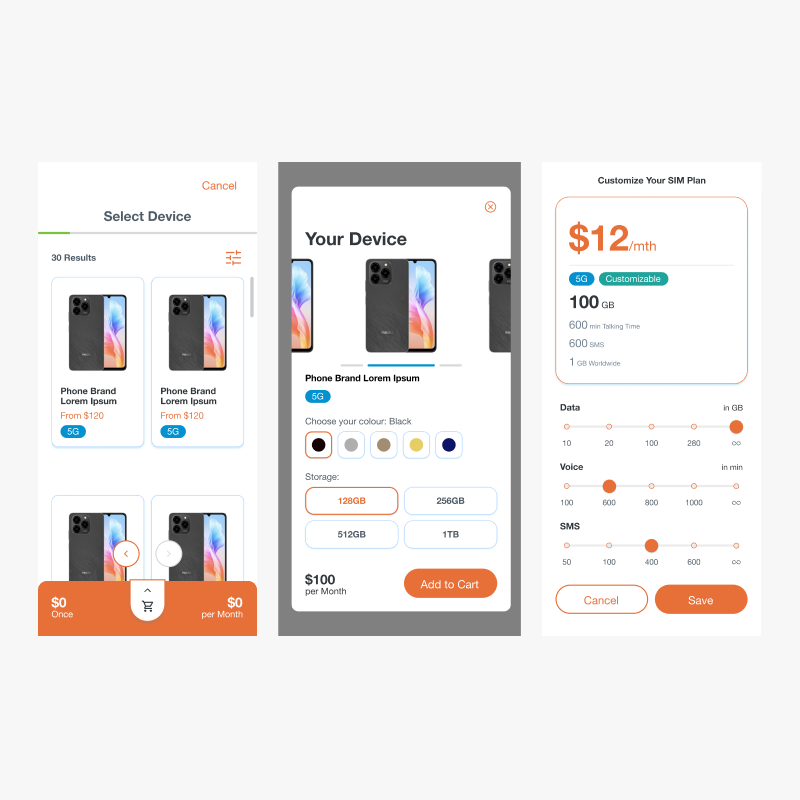
Telecommunication
A customizable, white-label solution to unify and simplify orders across multiple network providers.
View Project
Skills management
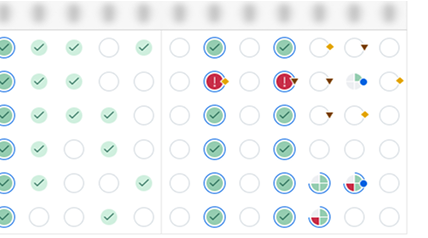
Enhancing Skill Matrix:
Clear Visual Cues for Better State Identification
View Project
Skills Management
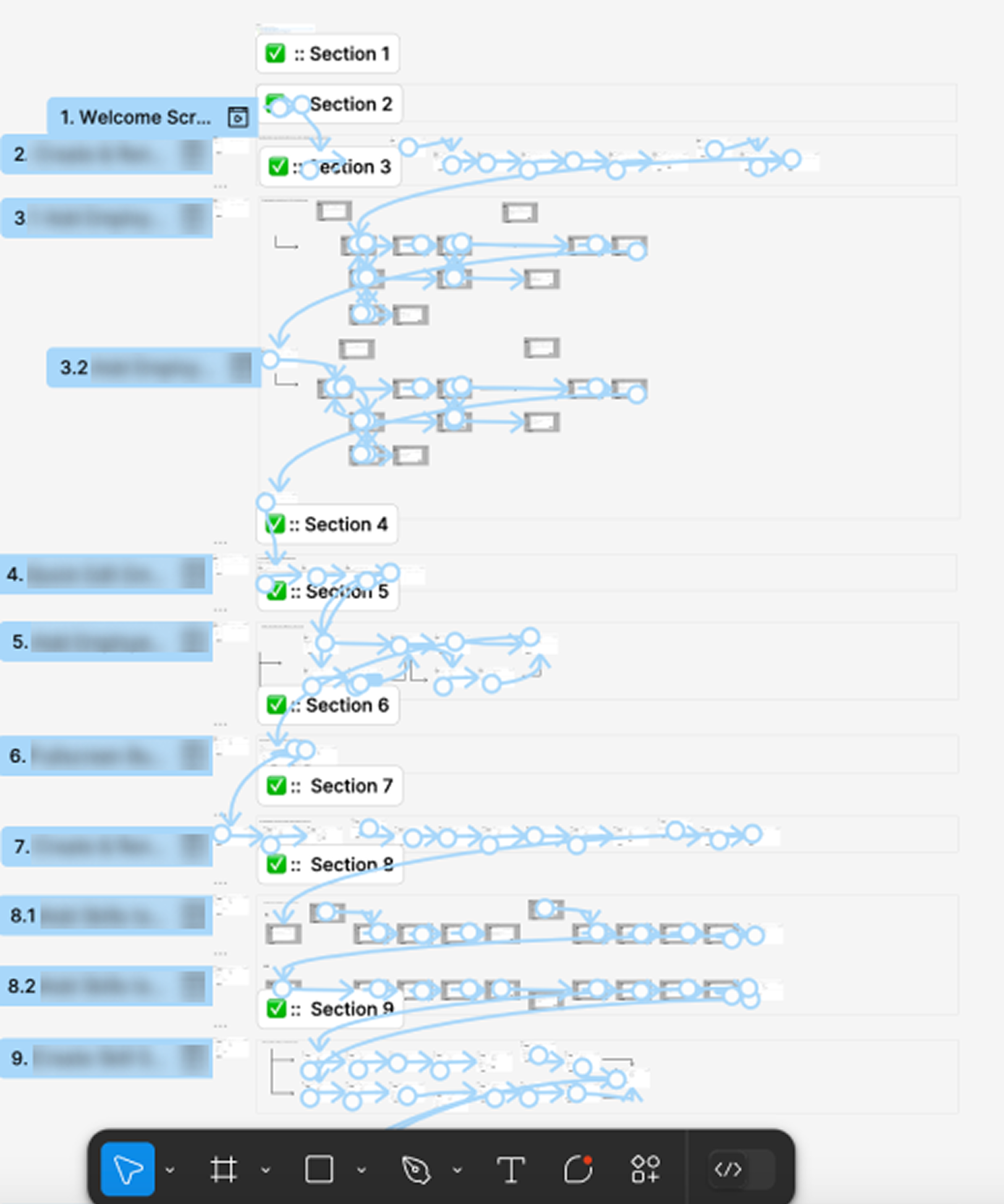
Creating 'Aha' Moments:
A UX Journey to Boost Engagement
View Project
Afrina Kugelstadt
afrina.design
Afrina Kugelstadt
Investing in Research Saves Time and Money
Dachzeltnormaden
Service
Service Design
Duration
12 Weeks
Year
2022
Context
In July 2021, catastrophic flooding devastated the Ahr Valley, destroying entire villages and leaving many residents in need of urgent help. In response, the Dachzeltnomaden community founded the Dachzeltnomaden Hilfsorganisation (DZNH) to provide long-term aid. They sought to improve coordination and communication for disaster relief efforts by envisioning a digital platform to support volunteers and affected residents efficiently during reconstruction.
Collabration
I helped design and implement a user-centered solution by conducting workshops, creating personas, analyzing interview insights and collaboratively developing a tailored approach to address the client’s challenges. I also presented our findings and design decisions to stakeholders. This work was part of my role as a working student.
Scoping Workshop
To understand their project environment, requirements, and workflows, we conducted a scoping workshop together. Methods such as stakeholder mapping, problem statements, and proto-personas were used to gather assumptions and information.
Problem Statement
- Information loss.
- Lack of collaboration between stakeholders.
- Insufficient digitization.
- No centralized management of information/tasks.
Possible Reasons for the Challenges:
- Many stakeholders are not interconnected.
- Different organizations lack a shared communication platform.
- No unified processes or agreements between authorities and NGOs.
- Unconnected authorities and inconsistent procedures.
Identifying Challenges and Opportunities with Affinity Mapping
To gather insights, we conducted user interviews with the Dachzeltnomaden Hilfsorganisation core team and regular volunteers. Interview topics included daily tasks, internal/external collaboration, communication, documentation, and tools/equipment. Using affinity mapping, we organized interview responses into clusters, categorizing them as positive (green), neutral (yellow), or negative (red). This approach provided a holistic view, allowing us to identify patterns and connections in the data.
Conclusion - Research Saves Resource
Stakeholder assumptions and challenges often shift when considering the overall journey of all involved. Our research revealed that satisfaction with work processes among the DZNH core team and volunteers was generally positive, uncovering fewer optimization opportunities than initially expected.
Existing digital tools can support planning and coordination needs. We identified tools to enhance communication and site planning for DZNH. Additionally, delegating responsibilities within the core team can reduce silos, enabling faster decisions and improving efficiency.
Published Article
More to explore
Telecommunication
A customizable, white-label solution to unify and simplify orders across multiple network providers.
View Project
Skills management
Enhancing Skill Matrix:
Clear Visual Cues for Better State Identification
View Project
Skills Management
Creating 'Aha' Moments:
A UX Journey to Boost Engagement
View Project
Afrina Kugelstadt
afrina.design